
RealSpine Deformity
A scoliosis and deformity training model. RealSpine Deformity is built for scoliosis correction, deformity surgery and decompression on a TH1 to L2 spine with 13 discs, the cord and the nerve roots. Three pathologies: Lenke 1, Lenke 3, or a patient specific curve built from DICOM data. Your hooks, rods, cages and screws, your navigation or your robot.
Posterior approach, open or percutaneous
Hooks, rods, cages, screws and drilling
Robotics, navigation, X ray and fluoroscopy compatible
Three pathologies
Two Lenke types as standard pathologies on the base, and a patient specific model when the case your program sees is not in the catalog. The model comes in two configurations, with or without the sacroiliac joint.
Schematic
Standard pathology
A main thoracic curve on the TH1 to L2 model, for correction, screw fixation and drilling with your own instrumentation.
PRO349
on base PRO336
Schematic
Standard pathology
The thoracic curve, as Realists builds it, so residents and reps work a second curve type on the same anatomy and the same base.
PRO334
on base PRO336
Your DICOM data
Configured from imaging
A deformity built from DICOM data, so a program can train the specific curve types it sees rather than a catalog curve. Realists needs the DICOM data to build it.
PRO394
on base PRO336
Configuration M
Thoracic and lumbar spine.
Configuration L
Thoracic and lumbar spine with the sacroiliac joint.
Skin and muscle layer comes closed (PRO335) or open (PRO339), for percutaneous or open work.
TH1 to L2
Thoracolumbar spine, where the Lenke curves live
13
Intervertebral discs, with spinal cord and nerve roots
3
Pathologies: Lenke 1, Lenke 3, patient specific
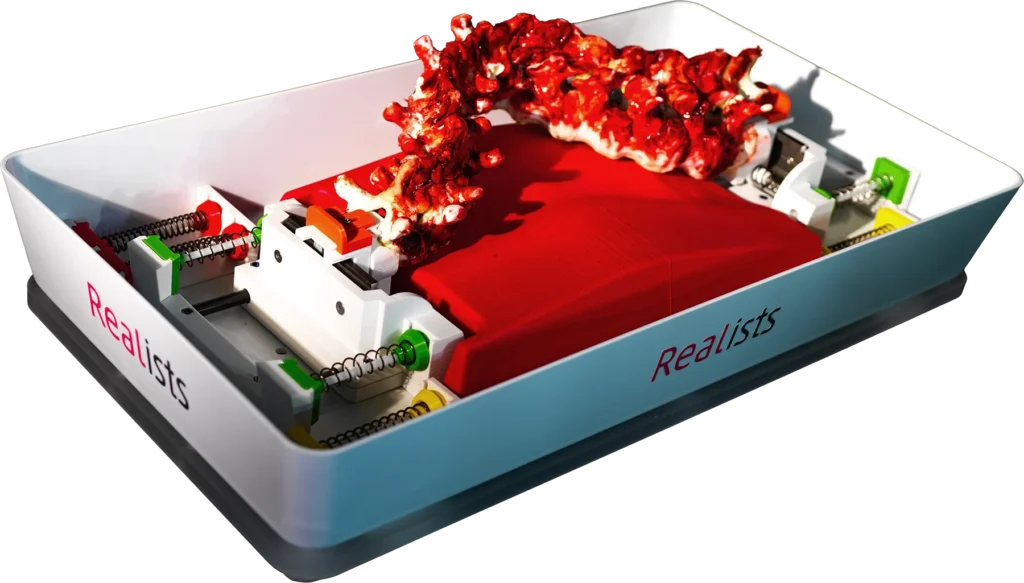
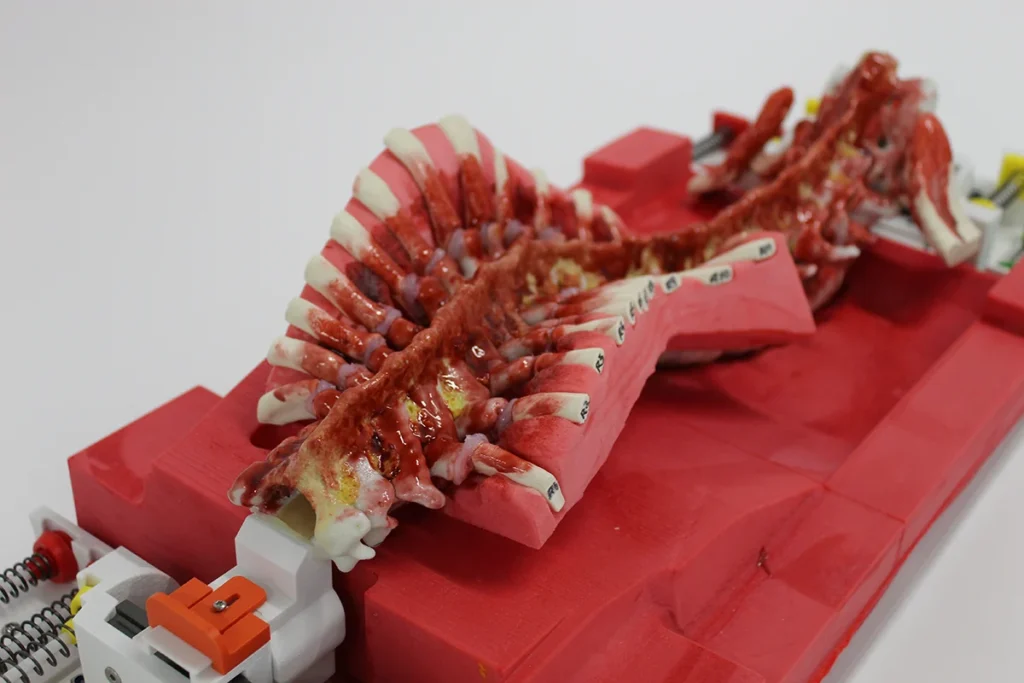
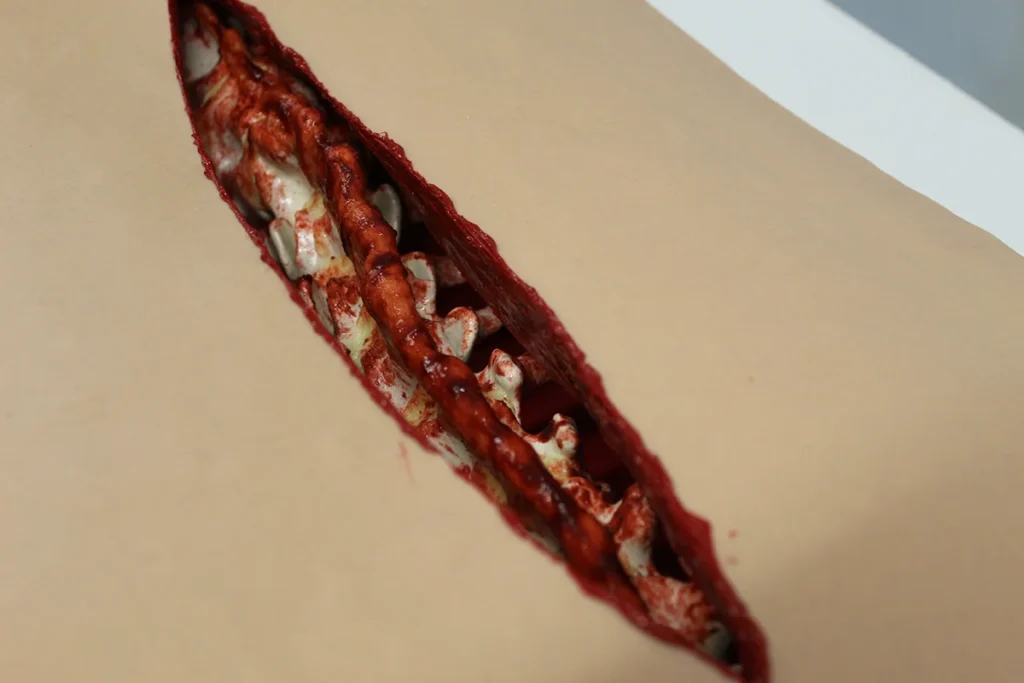
RealSpine Deformity, Lenke 3, PRO334 on base PRO336.
The case sheet
Level
TH1 to L2
Anatomy
Vertebrae and 13 intervertebral discs, spinal cord and nerve roots, ligamentum flavum, interspinal, posterior and anterior longitudinal ligaments
Pathology
Lenke 1, Lenke 3, patient specific from DICOM data
Approach
Posterior, open or percutaneous
Procedures
Deformity correction, screw fixation, drilling, patient specific deformities
Works with
Robotics, X ray and fluoroscopy, drilling and screws, external navigation, hooks, rods and cages
Parts
Lenke 1 PRO349, Lenke 3 PRO334, patient specific PRO394, base PRO336, skin and muscle closed PRO335 or open PRO339
Book a demo on the Deformity model
Who trains on it
Scoliosis specimens are rare, and no two curves match. This model gives a program the same Lenke 3 on Tuesday and again on Thursday.
For MedTech companies
Hooks, rods, cages and screws from your own set, with your navigation or your robot, on a Lenke 1 or Lenke 3 that resets for the next rep. A surgeon education day no longer depends on finding a scoliosis specimen.
How OEMs use RealSpine
For hospitals and residencies
Posterior correction, open or percutaneous, on a repeatable Lenke curve with the cord and the roots in the field. When the program sees a curve type the catalog does not carry, Realists builds it from the DICOM data.
How programs use RealSpine
The RealSpine family
Cervical, lumbar and Full Modular are not deformity models and are not needed to run this one. Each product in the RealSpine family works on its own.
Cervical
ACDF, corpectomy and disc replacement in front. Decompression with active bleeding at the back.
Cervical models
Lumbar
Eight herniations and a stenosis, ALIF, OLIF and LLIF access, ATP and transpsoas.
Lumbar models
Full Spine
One spine model in true dimensions, built for robots, navigation and long constructs.
Full Modular
Deformity
Lenke 1, Lenke 3, patient specific, TH1 to L2.
Back to top
Add RealImaging for real time, radiation free visualization when the C arm is not in the room.
Book a demo
Thirty minutes with Greg Rhinehart, in person at your site or online. He replies with available times and brings the platform.
Book a Demo
Prefer email? grhinehart@realistsusa.com, Greg answers.
Before you book
Which curve types are available?
Lenke 1 and Lenke 3 as standard pathologies on the TH1 to L2 model, and patient specific curves built from DICOM data.
What do we need to send for a patient specific model?
The DICOM data. Realists builds the deformity from it. Greg will walk you through the hand off.
Which implants can we use?
Hooks, rods, cages and screws, with drilling, from your own systems. The model is compatible with robotics and external navigation as well as X ray and fluoroscopy.
Open or percutaneous?
Both. The approach is posterior, open or percutaneous, and the skin and muscle layer comes closed or open.
Is this the cervical deformity model?
No. RealSpine Deformity covers TH1 to L2, the thoracolumbar spine where Lenke curves live. Cervical training is on the RealSpine Cervical models.
Book a demo on a Lenke 1 or a Lenke 3, or ask Greg about a patient specific build.
Book a Demo